
I work with Rieger Creek Lodge on their marketing, and our trip was hosted by the lodge. Everything below is my own honest experience.
On your first guided pheasant hunt, expect a safety briefing before you ever load a gun, a guide who walks you through everything, and dogs that do most of the work. At Rieger Creek we ate breakfast around 9, hunted about three hours a day across 6 to 10 fields, hit our bird limit every day, then spent the rest of the day at the lodge. You don’t need experience. You need the right license, decent boots, and a willingness to ask questions.
I’m not a hunter. Not yet, anyway. I grew up in Boston fishing saltwater and bass, nobody in my immediate family owns a gun, and before this trip my entire hunting résumé was two deer hunts in the Carolinas. Then I married into a South Carolina hunting family. They’re the ones who took me on those deer hunts and got my gun collection started. I’m comfortable with the pistols and AR I have at home and shoot at the range, but a shotgun on a flushing bird is a different skill entirely. This September I finally went on my first guided pheasant hunt, three days at Rieger Creek Lodge in Selby, South Dakota. If you’re new to this and wondering what a first guided pheasant hunt is actually like, this is the honest version, nerves included.
I was a little nervous going in. I’d followed Rieger Creek on social and knew the website, so I thought I had a decent feel for what to expect. What I didn’t know was how I’d do with a shotgun, whether I’d slow the group down, or whether I’d be the guy asking too many questions.
What helped most was the lodge’s free Hunt Planner. Everyone in our group downloaded it and went through it before the trip, so we all showed up with the right gear for the season. A couple of guys even used it to explain to their partners and families exactly what they were signing up for, which was an unexpected bonus.
A few guys in our group hadn’t bought their licenses yet. Since we hunted in September, preserve season, everyone needed the 5-day nonresident shooting preserve license. The Rieger Creek team got it handled fast, even walking one of our older members through it on his phone. It’s straightforward, but South Dakota’s online system is a bit dated, so do it at home where you’re not rushed. Our license guide walks you through which one you need.
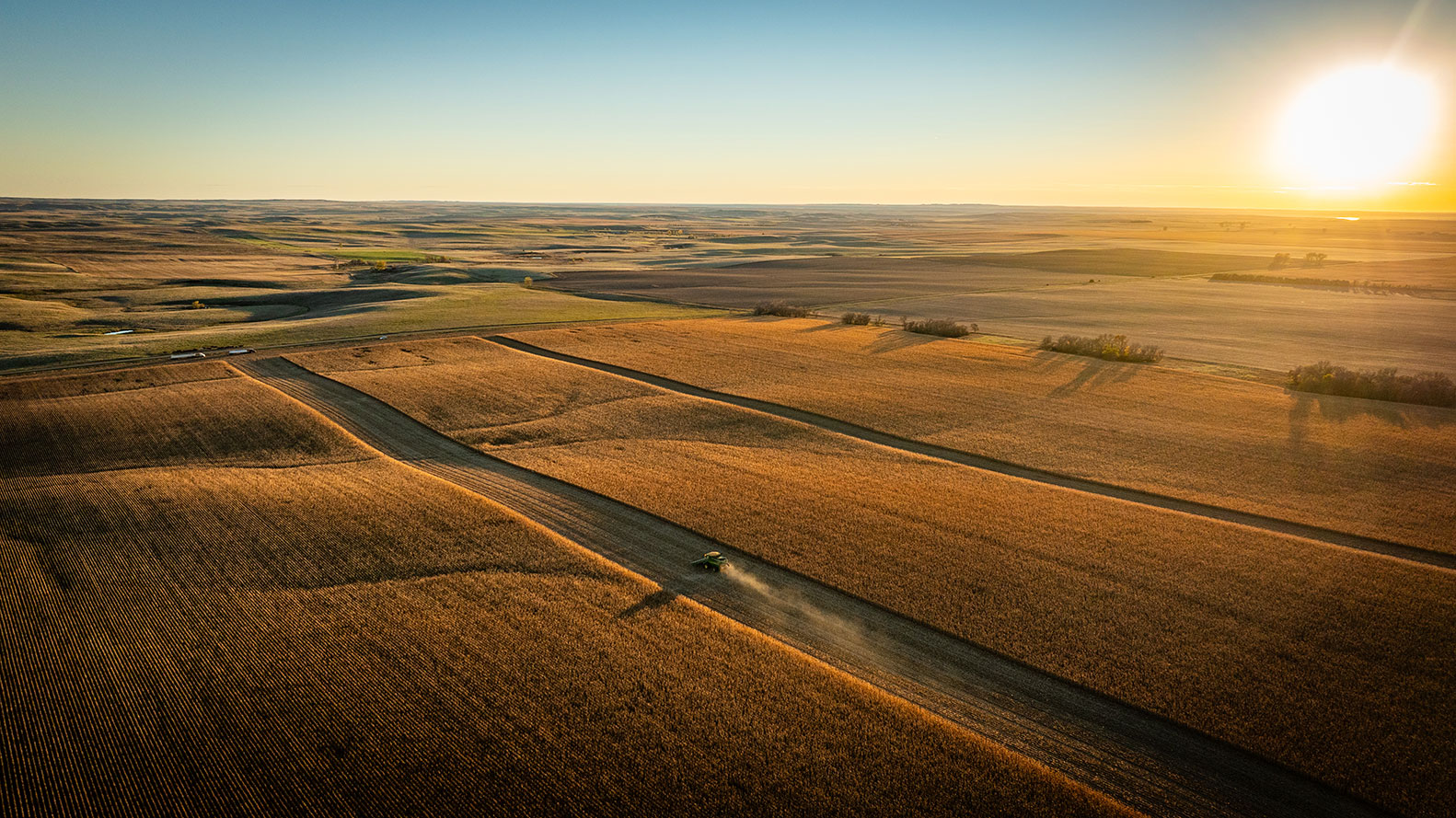
There were five of us: our pilot, who’s been hunting for more than 60 years, his grandson on his first hunt ever, our copilot with limited experience, my business partner, who’s also my uncle-in-law with more than 40 years in the field, and me. We flew into Mobridge Municipal in a Beechcraft Bonanza G36, and the minute we stepped out I knew the website and social didn’t do this place justice. They can’t. You have to feel the air and take in how big the country is out there.
Then we walked into the Den. Selby is a town of about 600 people, and from the outside you’d never guess what’s inside. It’s open and cozy at the same time, like a clean, extremely well thought-out speakeasy where everything fits. A few steps in, Christine, her daughters, and the staff greeted us, and right away it felt like we could be ourselves, wear whatever was comfortable, and settle in. That laid-back feeling set the tone for the whole trip.

I was up around 7 every day, which is normal for me with a baby and a toddler at home. A few of us were up early, and everyone was down by breakfast around 9. Breakfast was a mix of hearty and healthy, a lot of it local. We ate three full meals a day with snacks in between. And seriously, try the Scotcheroos.
It’s one of the few experiences where you get a full workout walking all day and still get fat.Todd, guide at Rieger Creek
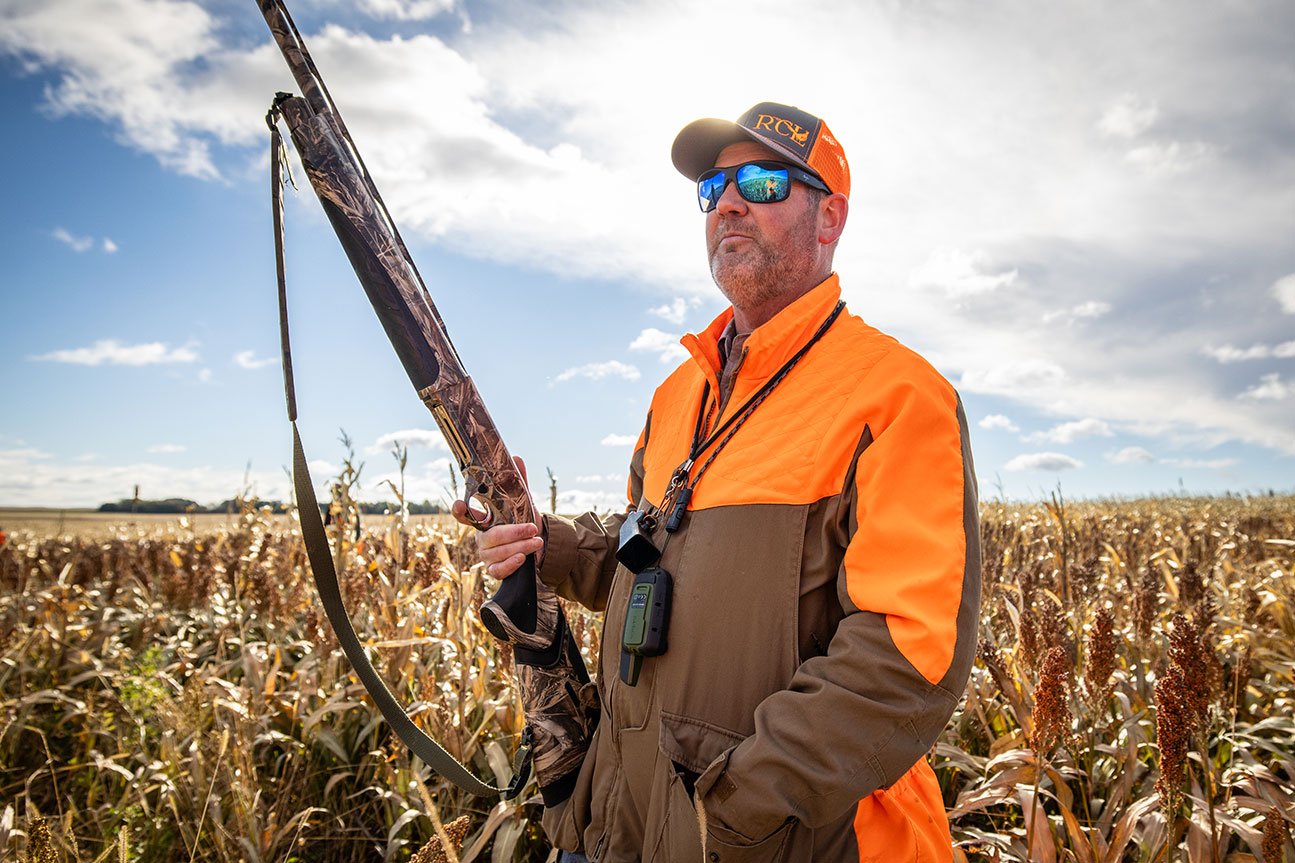
After breakfast came the morning brief, and for someone who had never bird hunted, it was the most important part of the day. The guides didn’t miss a beat on safety. They set me up with a rental shotgun, a brand-new Franchi that was nicer than most of the guns our group brought, and walked through exactly what we’d be doing in the field and what to expect.
Then we loaded up. You could hear the dogs fired up in the trailer behind the bus, and honestly my energy was about where theirs was. Mostly excited and a little anxious, though unlike them, I was still a bit nervous. On the ride out, the veterans traded stories from hunts going back decades, and our pilot was clearly thrilled to have his grandson along for his first one. Later, watching him see his grandson shoot his first pheasant was something special. Pure joy on his face.
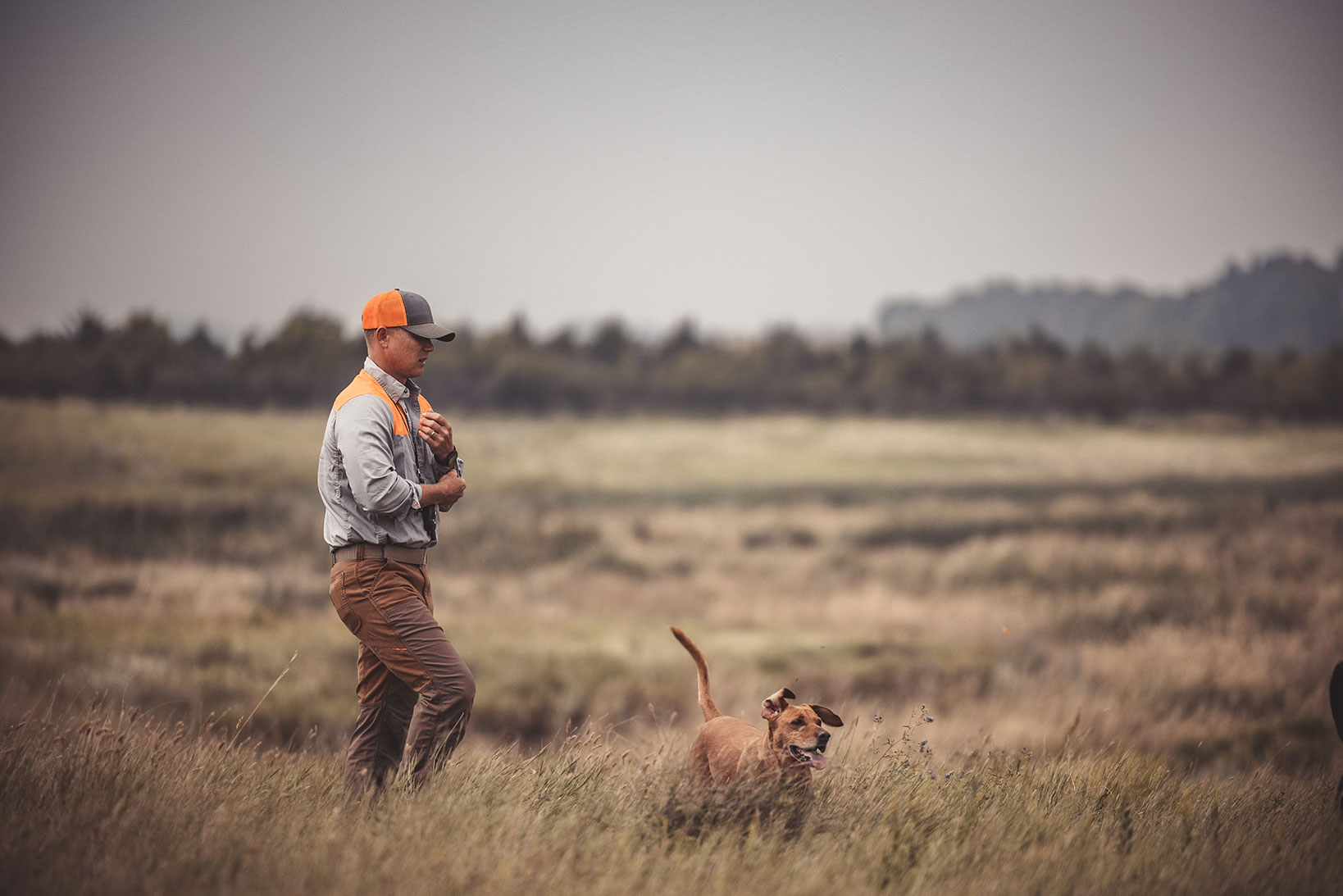
Watching the dogs work is something I’ll never forget. Then we started walking. It wasn’t always one set line. Sometimes we had wingers out on the sides, sometimes blockers at the end, but the guides were crystal clear on where everyone should be and kept communicating the whole time so it stayed that way. In September the cover is green and thick, so some fields took more effort than others, and walking the corn was a blast. The guides would yell “get ’em up,” and the dogs sure did. I can’t think of a happier dog life than what those dogs have.
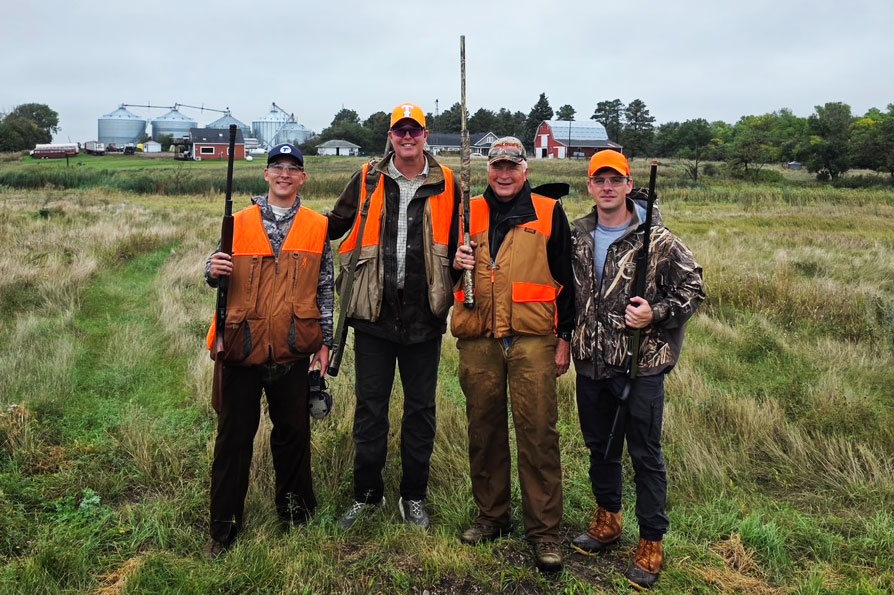
About two minutes into my first hunt ever, a rooster got up clean. I didn’t take the shot. It flushed from the middle of the line, I was out on the far right, and it all happened so fast I didn’t even get my safety off in time. Seconds later another bird got up. I fired right after my uncle-in-law did, which happened a lot, since he’s been doing this his whole life. He credited me with the bird. I’m 95% sure he hit it and I missed.
The guides were supportive the entire time. I asked a lot of questions and they answered every one, and their energy made the whole thing more fun. From what the veterans in our group said, that isn’t always the case at other places.
My first real bird came about halfway through that first day. That one was mine, and it had me hooked. Even writing this has me fired up and thinking about how to sharpen my skills so I can get back out as soon as possible. I’m hooked, and I have the Rieger Creek experience to thank for it. By day two and three, we mostly put our sharpest shooter out front as a blocker so he didn’t shoot all our birds.
I barely felt it, which surprised me after shooting a deer rifle. With the gun snug in your shoulder and standard field loads, it’s a push, not a punch. The Franchi was comfortable, and I felt like the guides put me in the best position possible so all I had to focus on was the bird.
We were in the field roughly three hours a day, working 6 to 10 fields, or pushes, with a quick walk between most of them. We hit our bird limit every day. The walking is real, since thick grass and corn feel a lot longer than the distance, but it moves at a comfortable pace.
The best surprise was how I felt. I grew up in a ski family, and there’s a giddy feeling right before you get on the first chairlift of the day. I hadn’t felt that in a long time. I felt it every morning before we went out and every afternoon when we came back in.
Back at the lodge we changed quickly and just enjoyed each other and everything the place offers. We played pool, shared stories with Christine and the staff, and couldn’t get enough time hanging out and getting to know them. At one point Christine mentioned the only thing on her mind was that we wouldn’t get enough time together. That says a lot about the people here. A lot of outdoor hospitality feels transactional. At Rieger Creek, they genuinely look forward to connecting with every guest. We also took a tour around town and got a real sense of how much the lodge gives back to Selby and the surrounding area.

Every meal was excellent. The pork chop and the prime rib were the standouts, and a lot of what we ate was sourced locally and made fresh by our chef, including chislic, walleye, and kuchen. If you don’t know chislic and kuchen, you will after a trip to South Dakota.
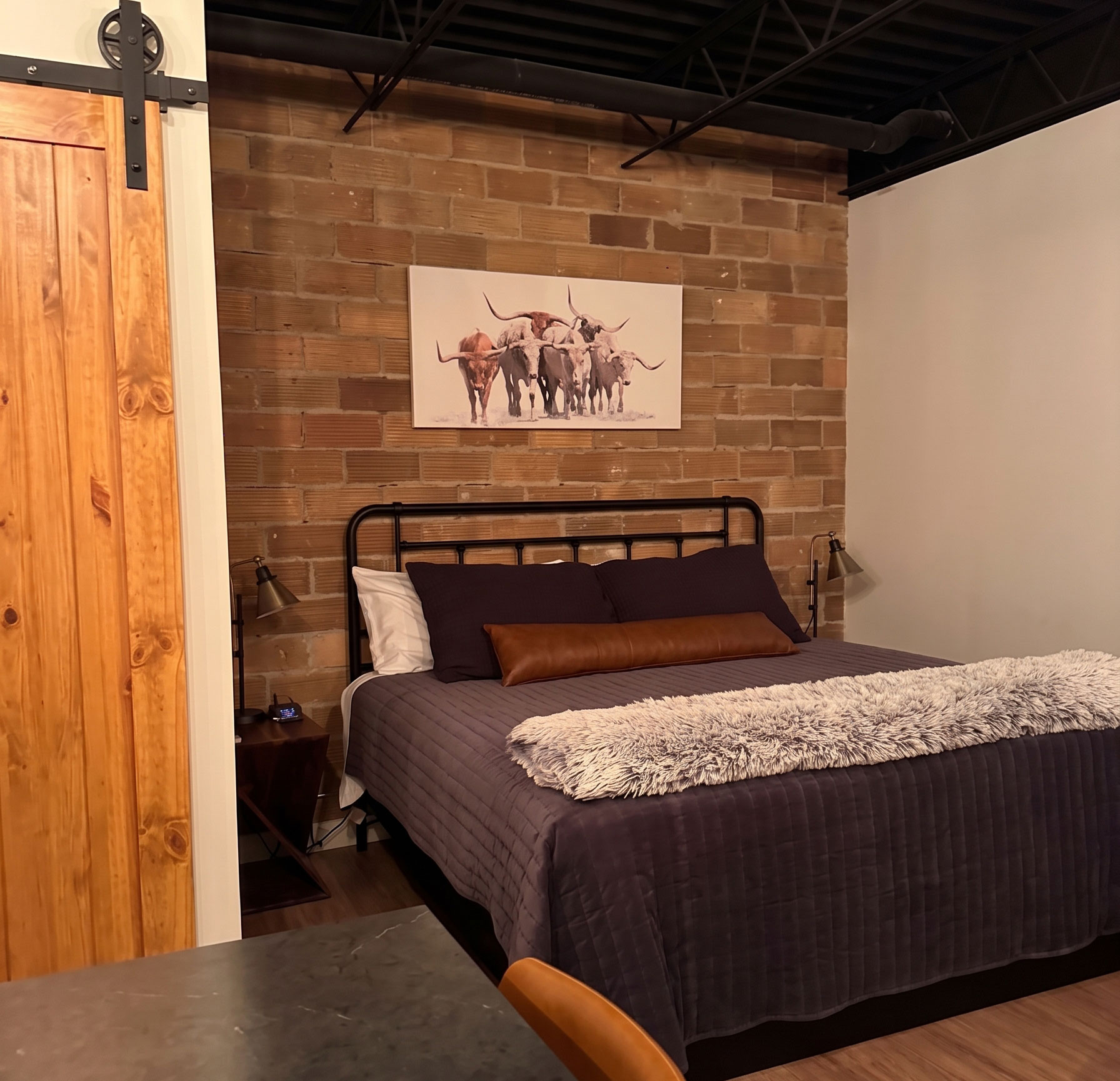
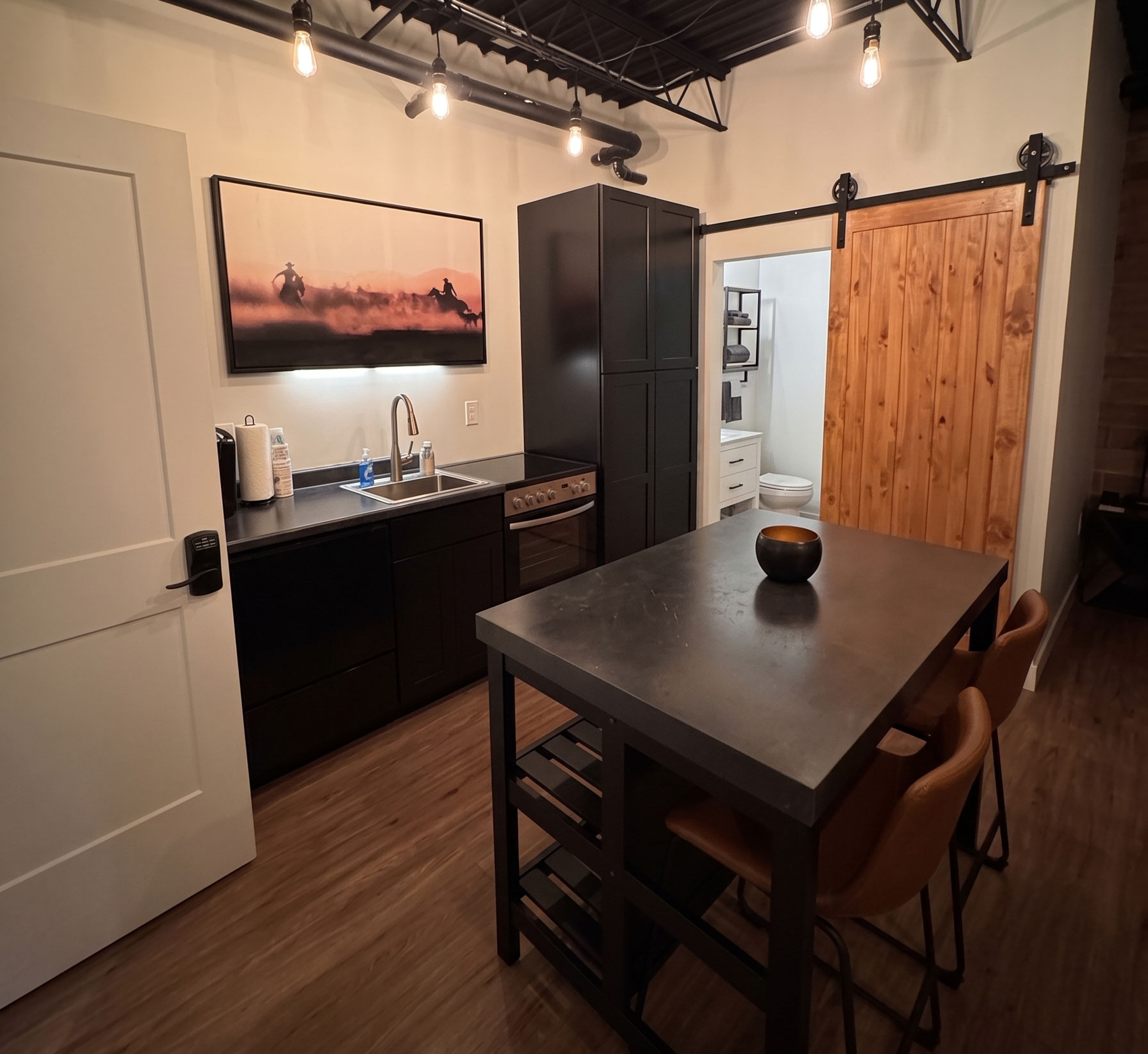
The rooms gave me the same feeling as the upscale lodges and hotels I’ve stayed at on ski trips out west, Vail, Salt Lake City, Breckenridge. The beds and pillows were super comfortable and the design is uniquely Rieger. My mom is an interior designer, and she was impressed by the photos I sent to our family group chat. The details are thought through too. There are boot dryers in the lockers, which we needed after the rain on day one.
Tipping was the thing I was most unsure about. The standard for a guided hunt is 10 to 20% of the trip cost. Around 10% says you had a solid time, 20% or more says it was excellent. For reference, Rieger Creek’s 3-day all-inclusive package for a group of 4 to 7 runs $4,295 per hunter on the rates page, so 10% is about $430 per hunter for the trip.
We tipped on the high side, given the experience, for our guides JB and Todd and the kitchen and lodge staff who make the place what it is. We used a mix of cash and card.
Shoot some clays before you go. Getting the shotgun up quickly and swinging on a moving target is the skill that matters. I would have had more luck on days one and two with a round or two of skeet first. By day three I was feeling good.
Follow the gear list more closely, especially boots and pants. I had everything I needed except the right boots, and mine were caked in mud on day one while it rained on and off. Day two was fair, around 65 degrees, but the densest fields were still wet, and better brush pants would have helped. It didn’t slow me down or bother me, it’s just the one thing I’d change. The Hunt Planner has the full gear list, and you can always call or text Christine if you need more info.
The only hiccup of the trip came on day two, when the bus that carts everyone around the property had some mechanical trouble. We made it back fine, and the guides switched us to their trucks, which were even better in the fields. It worked out.
The moment I’ll remember most isn’t a shot. It’s walking into the Den, being greeted by Christine and her staff, and feeling completely at ease within minutes. The attention to detail didn’t go unnoticed by anyone in our group.
I was fortunate growing up to stay at a lot of nice places around the country for skiing and fishing. What made Rieger Creek one of a kind was the combination of the local feel and the hospitality, from the top down. I came home with stories I’ll be telling for a long time. With a 3-year-old and a 6-month-old at home, this is an experience I want to share with the next generation of my family, and with the friends and people I love.
There’s a lot more to this trip than fits in one post, so I’ll be sharing a part two soon.
Grab the free Hunt Planner, the same one our group used. Licensing, season dates, what to pack, and how a day really runs.
No. Guides run a full safety briefing before you load a gun and walk you through everything. Two people in our group were on their first bird hunt ever and did great.
After breakfast, the guides give a safety and game-plan briefing, then drive the group to the field. Hunters walk in a line while trained dogs flush the birds. At Rieger Creek we hunted about three hours a day across 6 to 10 fields and hit our bird limit every day.
The standard is 10 to 20% of the trip cost, with around 10% for a solid trip and 20% or more for an excellent one. Remember the lodge and kitchen staff too. Cash or card both work.
No. Rieger Creek rents shotguns for $25 a day. Mine was a brand-new Franchi, nicer than most of the guns our group brought.
Not much with standard field loads. If you’ve shot a deer rifle, a 12 or 20 gauge pheasant load feels like a push rather than a punch, especially with the gun snug in your shoulder.
September is preserve season, so nonresidents need the 5-day shooting preserve license, bought at gooutdoorssouthdakota.com. For hunts after the October opener, you’d need the small game license instead.